

Eating Local in Canada: A Parent’s Guide to Season Eating
Written by Gillian Hayes, summerlunch+ staff
Canada’s climate and short growing season can limit what produce we group year round (1). Let’s explore what produce we can eat in each season and why seasonal eating is a benefit to us, Canada, and our planet.
Why Eating Seasonal Is Best
First, when we eat local produce, we support local communities and Canada’s Food System (1). We help our farmers, stimulate our economy, and reinvest in our communities (1). Being able to control our own food system is an important part of creating a food secure and resilient Canada (1).
Second, shopping locally and seasonally helps us feel connected to our food (1). We connect directly with farmers and know all about how our food is produced (1).
Additionally, our food is a higher quality (1). Seasonal produce is often fresher and more flavourful because it gets to you faster and travels less (1). Research also suggests that local food is more nutritious (2). Local produce is picked closer to it being ripe which may increase their vitamins and minerals content (2). The nutritional content also decreases the longer produce travels (2).
Sustainability Myth
Local food is often considered to be more sustainable because it travels less to get to our kitchen table (1). However, research suggests distance traveled is not the only measure of sustainability. True sustainability depends on individual farms and crops, so do not feel bad if you are unable to find or afford local food (1).
Food Across Canada
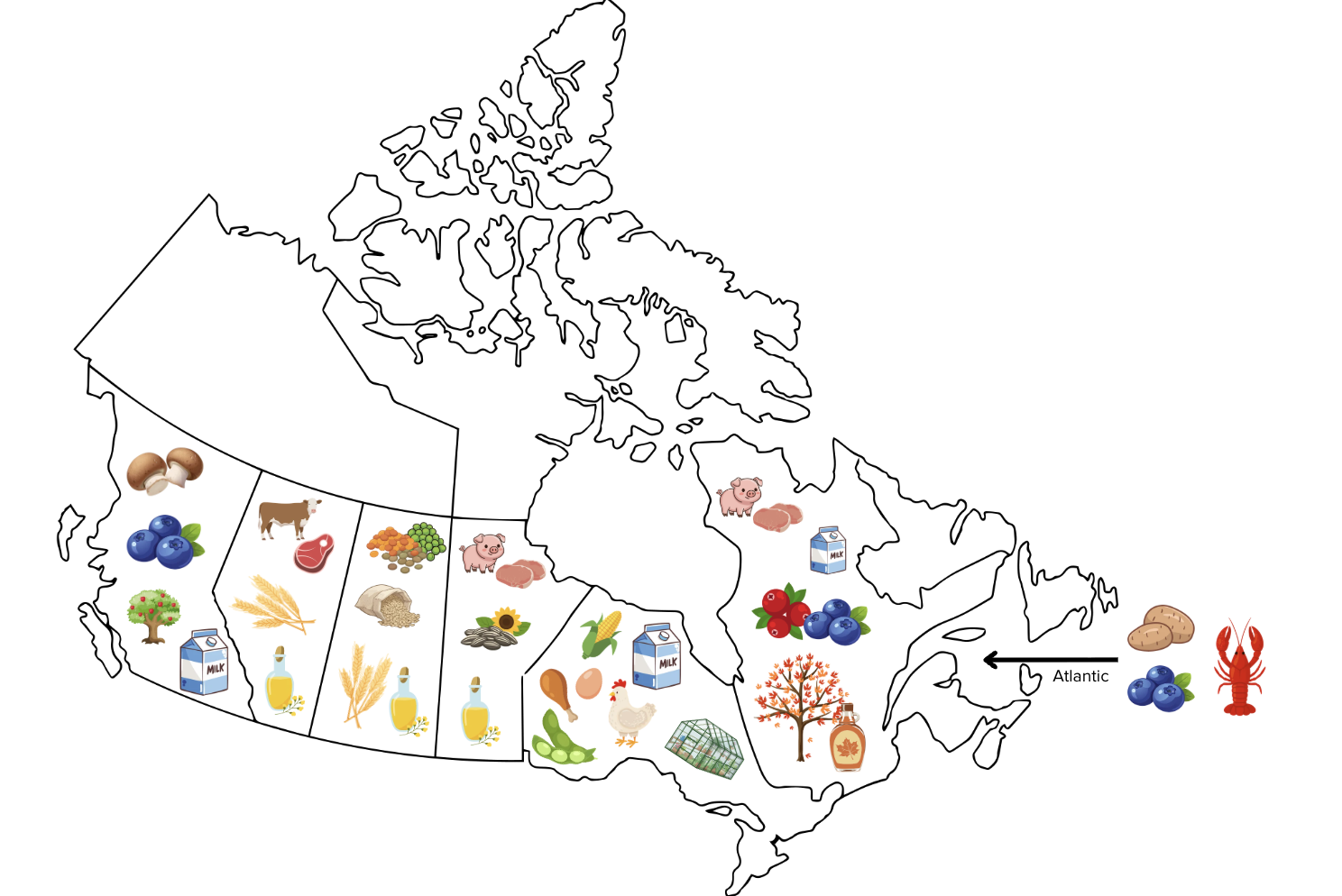
Canada’s Food System employs over 2.3 million Canadians and generates 150 billion dollars per year (3). Canada’ alone has almost 190,000 farms (3). Because Canada is massive and has a diverse climate, each province specializes in different produce and agricultural goods.
Take a look at the map to see which local foods you enjoy in your hometown (3).
Food by Province
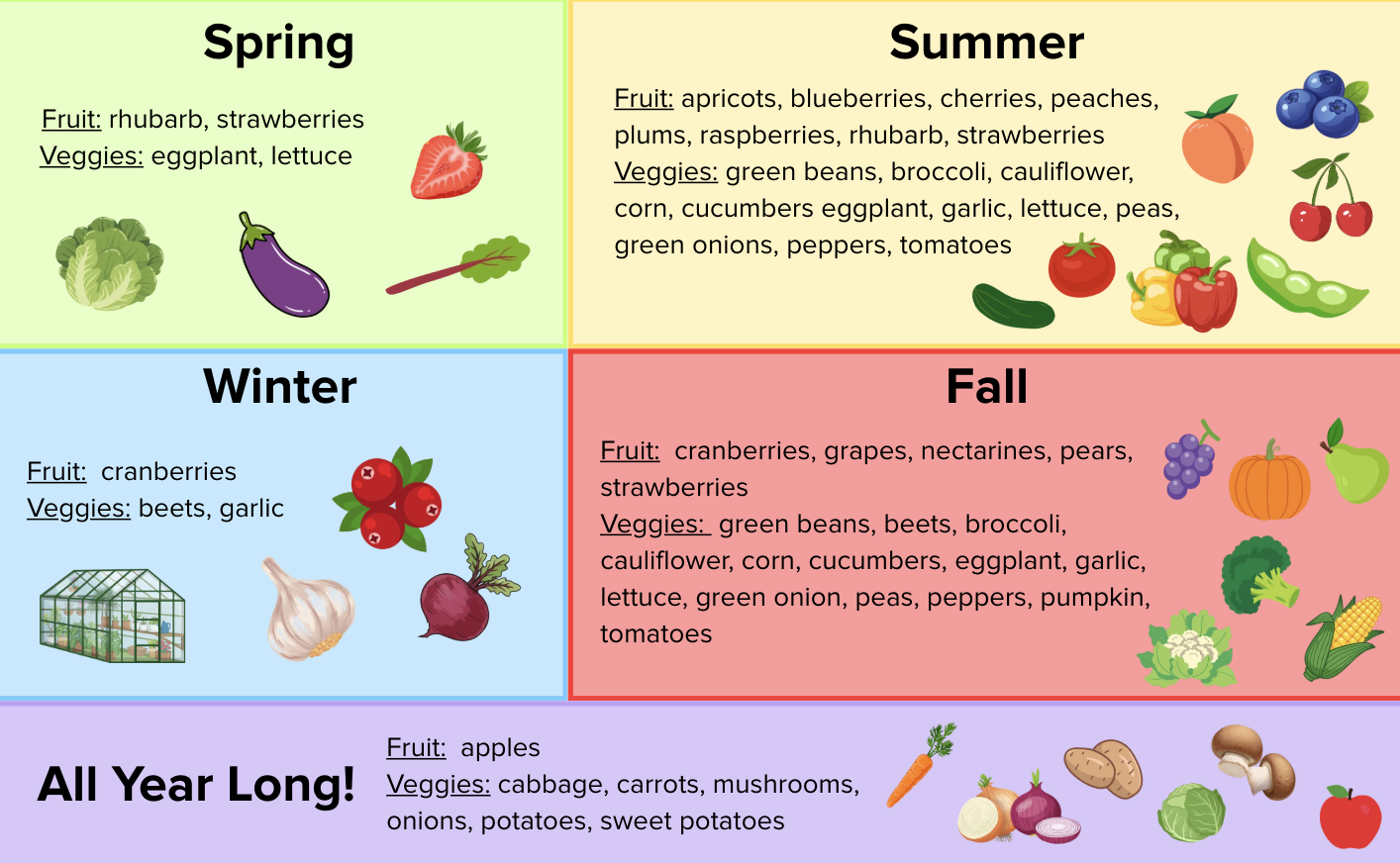
Produce by Season
We may have long winters, but we grow fruit and vegetables throughout the year (4). We also have a growing number of greenhouses in Canada (4).
Take a look at the guide below to see what produce you can add to your meals in each season! (4)
Shopping Smart with Food Labels
Labels can help us determine which food products are Canadian (5).
"Product of Canada" foods mean processing and labour are Canadian and a significant amount of the ingredients are from Canada (5).
"Made in Canada" labels mean the last step in processing occurred in Canada (5). For example, the assembly of frozen pizza parts was done in Canada (5).
"100% Canadian" means that all ingredients, processing, and labour used to make the food are Canadian (5).
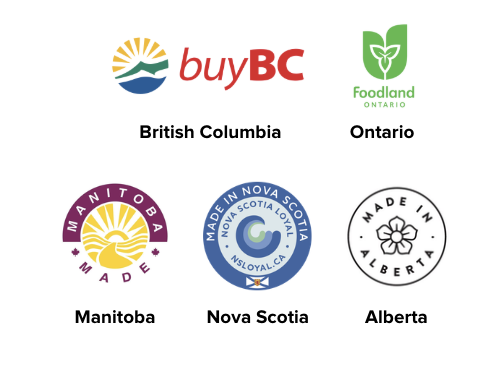
Finally, lots of the provinces also have special symbols they include on produce and food products to show they’re local (5). Look for which one you would see in your local supermarket.
References
Magpie Group. (n.d.). Redefining “Local” Food: Benefits, Myths and Sustainability. Canadian Food Focus. https://canadianfoodfocus.org/food/redefining-local-food-benefits-myths-and-sustainability/
University of North Carolina Nutrition Research Institute. (2025, June 6). Eating with the seasons: Why it matters for your health. https://uncnri.org/2025/06/06/eating-with-the-seasons-why-it-matters-for-your-health/
Agriculture and Agri-Food Canada. (n.d.). Sector trend analysis – Packaged food trends in Canada. Government of Canada. https://agriculture.canada.ca/en/sector/overview
Canadian Food Focus. (n.d.). What’s in Season. https://canadianfoodfocus.org/whats-in-season/
Canadian Food Inspection Agency. (2025, June 4). How to identify Canadian food. Government of Canada. https://inspection.canada.ca/en/food-labels/labelling/consumers/canadian-food
Manger local au Canada: Guide de l’alimentation saisonnière
Écrit par Gillian Hayes, membre de l’équipe de summerlunch+
Le climat du Canada et la courte saison de croissance peuvent limiter la variété des fruits et légumes que nous pouvons consommer tout au long de l'année (1). Voyons quels fruits et légumes nous pouvons manger a chaque saison et pourquoi manger de façon saisonnière est bénéfique pour nous, pour le Canada et pour notre planète.
Pourquoi il est préférable de manger de façon saisonnière
Tout d’abord, lorsque nous consommons des produits locaux, nous soutenons les communautés locales et le système alimentaire canadien (1). Nous aidons nos agriculteurs, stimulons notre économie et réinvestissons dans nos collectivités (1). Être en mesure de contrôler notre propre système alimentaire est un élément important pour créer un Canada résilient et doté d’une sécurité alimentaire (1).
Deuxièmement, magasiner localement et selon les saisons nous aide à nous sentir en lien avec notre alimentation (1). Nous établissons un lien direct avec les agriculteurs et savons tout sur la façon dont notre nourriture est produite (1).
De plus, nos aliments sont de meilleure qualité (1). Les produits saisonniers sont souvent plus frais et plus savoureux, car ils vous parviennent plus rapidement et parcourent moins de distance (1). Des recherches suggèrent également que les aliments locaux sont plus nutritifs (2). Les produits locaux sont cueillis à un stade de maturité plus avancé, ce qui peut augmenter leur teneur en vitamines et en minéraux (2). La valeur nutritive diminue également à mesure que les produits parcourent de plus longues distances (2).
Mythe sur la durabilité
On considère souvent que les aliments locaux sont plus durables, car ils parcourent moins de distance avant d’arriver sur notre table (1). Cependant, des études indiquent que la distance parcourue n’est pas le seul critère de durabilité. La véritable durabilité dépend des pratiques des fermes et des récoltes. Ne vous en faites donc pas si vous ne parvenez pas à trouver des aliments locaux ou si vous n’avez pas les moyens de vous les procurer (1).
L’alimentation au Canada
Le système alimentaire canadien emploie plus de 2,3 millions de Canadiens et génère 150 milliards de dollars par année (3). Le Canada compte à lui seul près de 190 000 fermes (3). Comme le Canada est un pays immense et que son climat est varié, chaque province se spécialise dans différents produits frais et agricoles.
Jetez un coup d'œil à la carte pour découvrir les aliments locaux que vous appréciez dans votre ville natale (3).
Les fruits et les légumes par saison
Nos hivers sont peut-être longs, mais nous cultivons des fruits et des légumes tout au long de l'année (4). Le nombre de serres ne cesse d'augmenter au Canada (4).
Consultez le guide ci-dessous pour découvrir quels fruits et légumes vous pouvez ajouter à vos repas à chaque saison! (4)
Faire des achats intelligents grâce aux étiquettes alimentaires
Les étiquettes peuvent nous aider à déterminer quels produits alimentaires sont canadiens (5).
Les aliments portant la mention « Produit du Canada » signifient que la transformation et la main-d’œuvre sont canadiennes et qu’une part importante des ingrédients provient du Canada (5).
Les étiquettes « Fabriqué au Canada » signifient que la dernière étape de la transformation a eu lieu au Canada (5). Par exemple, l’assemblage des composants d’une pizza surgelée a été effectué au Canada (5).
« 100 % canadien » signifie que tous les ingrédients, la transformation et la main-d’œuvre utilisés pour fabriquer l’aliment sont canadiens (5).
Enfin, de nombreuses provinces ont également des symboles spéciaux qu’elles apposent sur les fruits, les légumes et les produits alimentaires pour indiquer qu’ils sont locaux (5). Cherchez celui que vous pourriez voir dans votre supermarché local.