

The Truth About Social Media’s Biggest Nutrition Trends
Written by Petra Al-hinn Dietetic Student
Social media can be a great tool for health and wellness. In just a few taps, you can discover quick weeknight dinner ideas, learn new cooking techniques, and connect with communities and people who inspire you to live a healthy lifestyle.
However, anyone can post content online, which means false information can spread quickly. With so much nutrition advice at our fingertips, it can be difficult to separate true information from false claims.
Let’s take a closer look at some of social media’s biggest nutrition trends and find out what the science really says.
Claim 1: Red-40 Causes Hyperactivity and Attention Disorders in Children
What Is Red-40?
Red-40, also known as Allura Red, is a food dye used to give foods a bright red colour and make them look more appealing. It can be found in foods such as red candy, fruit snacks, jelly desserts, and some chips and drinks.
What Does Science Say About Red-40?
There has been a lot of discussion online about whether Red-40 can negatively affect children’s behaviour and health. Here’s what the science says:
Current evidence does not show that Red-40 causes ADHD or other attention disorders
Some children may be more sensitive to food dyes. For these children, food dyes may make them more hyperactive or affect their behaviour however more research is needed.
Most children do not experience effects from eating Red-40.
Some studies have found possible health concerns in animals, but this does not always mean the same thing happens in humans.
Overall, the evidence linking Red-40 to negative health effects in children is limited and mixed.
Like many food ingredients, consuming extremely large amounts of Red-40 is not considered ideal for health. Health authorities set a certain standard known as the acceptable daily intake (ADI) so that consumers know what levels are safe.
For Red-40, the ADI is 7mg per kilogram of body weight. For a child weighing 40 kg (about 88 lb), this would be a very large amount of Red-40-containing foods.
For example a child would need to consume approximately:
1.5 kg (3.3 lb) of red candy
3.5 kg (7.7 lb) of red chips
3.4 kg (7.5 lb) of red juice
every day to reach the ADI of Red-40.
What Does This Mean?
Red-40 may not deserve all the fear it sometimes receives online. If a child were eating kilograms worth of candy, chips, or juice every day, other nutrition concerns such as high amounts of sugar, sodium, or saturated fat would be much more important to consider. So, the next time your child enjoys a red coloured treat, there’s no need to panic. Enjoying these foods occasionally and in moderation can be part of a healthy diet.
Claim 2: You Should Eat as Much Fibre as Possible to Improve Gut Health and Digestion
What Is “Fibre Maxxing”?
“Fibre maxxing” is the idea of eating very large amounts of fibre each day to maximize health benefits.
Fibre is an important nutrient that supports digestion, helps you feel full after meals, and is associated with benefits such as improved heart health and blood sugar control.
What Does Science Say About Fibre Maxxing?
The science is clear that getting enough fibre is important.
This is how much fibre people need in a day based on age and sex, although individual needs are different.
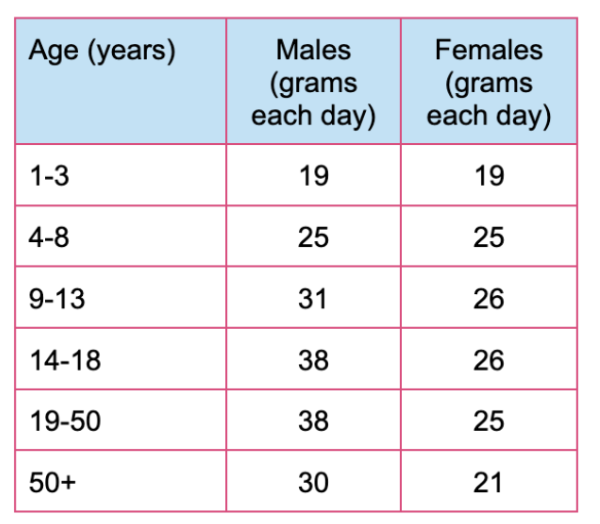
*Adapted From Alberta Health Services 2020
Many people do not reach the recommended amounts, so increasing fibre intake can be beneficial.
There is also no specific maximum amount of fibre you need to reach. Once you are meeting your daily fibre needs, there is not strong evidence that consuming extremely high amounts provides additional health benefits. In fact, too much fibre can cause stomach pain, constipation, bloating, and other digestive issues. Since fibre helps you feel full, consuming too much may also make it harder to eat enough food and receive other essential nutrients.
Instead of focusing on eating as much fibre as possible, focus on getting enough fibre from a variety of foods, such as:
Fruits and vegetables
Whole grains
Beans, lentils, and legumes
Nuts and seeds
Want to Increase Your Fibre Intake? Keep These Tips in Mind:
1. Increase fibre slowly →Going from a low-fibre diet to a high-fibre diet too quickly can cause bloating, gas, stomach cramps, or changes in bowel habits. Start with small amounts of fibre spread throughout your day and gradually increase it as your body gets used to it.
2. Drink enough water →Fibre works with water to help keep your digestive system moving and support healthy bowel movements. If you increase your fibre intake too much without drinking enough fluids, you may experience constipation or discomfort, so make sure you are drinking enough fluid.
Claim 3: You Need Electrolytes Every Day Because They Hydrate You Better Than Water
What Are Electrolytes?
Electrolytes are minerals that help your body perform important functions, including supporting your muscles, nerves, heart, and fluid balance.
Some of the main electrolytes include:
Sodium
Potassium
Calcium
Magnesium
There are many electrolyte drinks and powders on the market. Depending on the product, they may contain different amounts of electrolytes, as well as added sugar or caffeine.
What Does Science Say About Electrolytes?
Our bodies are already very good at maintaining the right balance of electrolytes. Healthy kidneys help regulate which electrolytes are kept in the body and which are removed through urine.
For most people, a balanced diet will provide all the electrolytes they need, meaning an electrolyte drink is not necessary every day.
Electrolyte drinks can be helpful in situations where the body loses a lot of fluid and electrolytes, such as:
During long and intense exercise, especially when there is a lot of sweating or heat exposure
Illness that causes fluid loss, such as vomiting or diarrhea
In these situations, replacing both fluids and electrolytes is important and necessary.
However, most people do not need an electrolyte drink for everyday activities. In fact, some electrolyte drinks can contain high amounts of sodium, sugar or caffeine which are not ideal for overall health.
You may have also seen claims that you should drink electrolytes everyday because they hydrate you better than water. However, there is no strong evidence that people need electrolyte drinks for everyday hydration. For most healthy people, water is all you need to stay hydrated.
The Bottom Line
Water is still the best choice for most people on most days
A balanced diet can provide all the electrolytes a person needs.
Electrolytes aren't automatically healthier, so check the nutrition label for added sugar, sodium, and caffeine.
Electrolyte drinks can be useful during long intense exercise or when someone is losing significant fluids through vomiting, diarrhea or other illness.
Don't Believe Everything You See Online
Social media can be a great place to find inspiration, learn new skills, and discover helpful health information. But it is important to remember that not everything you see online is accurate.
Nutrition is not about finding one perfect food, ingredient, or trend. A healthy diet is built on the bigger picture: variety, balance, moderation, and enjoying food without fear.
So the next time you see a nutrition trend online, take a moment to ask:
Is this backed by science, or is it just a viral claim?
References
Alberta Health Services (Nutrition Services), "Fibre Facts"
Arnold, L. E., Lofthouse, N., & Hurt, E. (2012). Artificial food colors and attention-deficit/hyperactivity symptoms: Conclusions to dye for. Neurotherapeutics, 9(3), 599–609. https://doi.org/10.1007/s13311-012-0133-x
Lehmkuhler, A., Miller, M. D., Bradman, A., Castorina, R., Chen, M.-A., Xie, T., & Mitchell, A. E. (2022). Levels of FD&C certified food dyes in foods commonly consumed by children. Journal of Food Composition and Analysis, 112, 104649. https://doi.org/10.1016/j.jfca.2022.104649
Oliveira, N. (2025, September 4). Do I need electrolyte drinks? • the nutrition source. The Nutrition Source - Harvard Chan School. https://nutritionsource.hsph.harvard.edu/electrolyte-drinks/
SCHAB, D. W., & TRINH, N.-H. T. (2004). Do artificial food colors promote hyperactivity in children with hyperactive syndromes? A meta-analysis of double-blind placebo-controlled trials. Journal of Developmental & Behavioral Pediatrics, 25(6), 423–434. https://doi.org/10.1097/00004703-200412000-00007
Zhang, Q., Chumanevich, A. A., Nguyen, I., Chumanevich, A. A., Sartawi, N., Hogan, J., Khazan, M., Harris, Q., Massey, B., Chatzistamou, I., Buckhaults, P. J., Banister, C. E., Wirth, M., Hebert, J. R., Murphy, E. A., & Hofseth, L. J. (2023). The synthetic food dye, red 40, causes DNA damage, causes colonic inflammation, and impacts the microbiome in mice. Toxicology Reports, 11, 221–232. https://doi.org/10.1016/j.toxrep.2023.08.006
La vérité sur les principales tendances en matière de nutrition sur les médias sociaux
Écrit par Petra Al-hinn, étudiante en nutrition
Les médias sociaux peuvent être un excellent outil pour la santé et le bien-être. En quelques clics seulement, vous pouvez découvrir des idées de souper rapide pour les soirs de semaine, apprendre de nouvelles techniques culinaires et entrer en contact avec des communautés et des personnes qui vous inspirent à adopter un mode de vie sain.
Cependant, n’importe qui peut publier du contenu en ligne, ce qui signifie que les fausses informations peuvent se propager rapidement. Avec autant de conseils nutritionnels à portée de main, il peut être difficile de distinguer les informations véridiques des allégations erronées.
Examinons de plus près certaines des principales tendances en matière de nutrition sur les médias sociaux et voyons ce que la science en dit réellement.
Allégation #1: le Rouge 40 provoque de l’hyperactivité et des troubles de l’attention chez les enfants.
Qu’est-ce que le rouge n° 40?
Le rouge n° 40, également connu sous le nom de« Allura Red » , est un colorant alimentaire utilisé pour donner aux aliments une couleur rouge vif et les rendre plus appétissants. On le retrouve dans des aliments tels que les bonbons rouges, les collations aux fruits, les desserts à la gelée, ainsi que dans certaines croustilles et boissons.
Que dit la science au sujet du rouge n° 40?
La question de savoir si le Rouge n° 40 peut avoir des effets négatifs sur le comportement et la santé des enfants a fait l’objet de nombreuses discussions en ligne. Voici ce qu’en dit la science:
Les données actuelles ne démontrent pas que le Rouge n° 40 cause le TDAH ou d’autres troubles de l’attention.
Certains enfants peuvent être plus sensibles aux colorants alimentaires. Chez ces enfants, les colorants alimentaires peuvent les rendre plus hyperactifs ou affecter leur comportement; toutefois, des recherches supplémentaires sont nécessaires.
La plupart des enfants ne ressentent aucun effet après avoir consommé du Rouge n° 40.
Certaines études ont mis en évidence des risques potentiels pour la santé chez les animaux, mais cela ne signifie pas nécessairement que la même chose se produise chez les humains.
Dans l’ensemble, les données établissant un lien entre le Rouge n° 40 et des effets négatifs sur la santé des enfants sont limitées et contradictoires.
Comme pour de nombreux ingrédients alimentaires, la consommation de quantités extrêmement importantes de Rouge n° 40 n’est pas considérée comme idéale pour la santé. Les autorités sanitaires ont établi une norme appelée « dose journalière admissible » (DJA) afin que les consommateurs sachent quels niveaux sont sans danger.
Pour le Rouge n° 40, la DJA est de 7 mg par kilogramme de poids corporel. Pour un enfant pesant 40 kg (environ 88 lb), cela représenterait une très grande quantité d’aliments contenant du rouge n° 40 .
Par exemple, un enfant devrait consommer environ:
1,5 kg (3,3 lb) de bonbons rouges
3,5 kg (7,7 lb) de croustilles rouges
3,4 kg (7,5 lb) de jus rouge
chaque jour pour atteindre la DJA du rouge n° 40.
Qu’est-ce que cela signifie?
Le Rouge n° 40 ne mérite peut-être pas toute la crainte qu’il suscite parfois en ligne. Si un enfant mangeait chaque jour de kilogrammes de bonbons, de croustilles ou de jus, d’autres préoccupations nutritionnelles, telles que les quantités élevées de sucre, de sodium ou de gras saturés, seraient bien plus importantes à prendre en compte. Ainsi, la prochiane fois que votre enfant degustera une gaterie de couleur rouge, pas de panique. Consommer ces aliments de temps en temps et avec modération peut faire partie d’une alimentation saine.
Allégation n° 2 : Il faudrait consommer autant de fibres que possible pour améliorer la santé intestinale et la digestion.
Qu’est-ce que le « fibre maxxing »?
Le « fibre maxxing » est le concept consistant à consommer de très grandes quantités de fibres chaque jour afin de maximiser les bienfaits pour la santé.
Les fibres constituent un nutriment important qui favorise la digestion, aide à se sentir rassasié après les repas et est associé à des bienfaits tels qu’une meilleure santé cardiaque et un meilleur contrôle de la glycémie.
Que dit la science au sujet de l’optimisation de l’apport en fibres?
La science est formelle : il est important de consommer suffisamment de fibres.
Voici les apports quotidiens recommandés en fibres en fonction de l’âge et du sexe, bien que les besoins individuels puissent varier.
Beaucoup de gens n’atteignent pas les quantités recommandées; il peut donc être bénéfique d’augmenter leur apport en fibres.
Il n’y a pas non plus de quantité maximale spécifique de fibres à atteindre. Une fois que vos besoins quotidiens en fibres sont comblés, rien ne prouve vraiment que la consommation de quantités extrêmement élevées apporte des bienfaits supplémentaires pour la santé. En fait, un excès de fibres peut causer des maux d’estomac, de la constipation, des ballonnements et d’autres troubles digestifs. Comme les fibres favorisent la sensation de satiété, en consommer trop peut également vous empêcher de manger suffisamment et d’absorber d’autres nutriments essentiels.
Au lieu de chercher à consommer le plus de fibres possible, concentrez-vous plutôt sur un apport suffisant provenant d’une variété d’aliments, tels que:
Les fruits et les légumes
Les grains entiers
Les haricots, les lentilles, et les légumineuses
Les noix et les graines
Vous souhaitez augmenter votre apport en fibres? Gardez ces conseils à l'esprit:
1. Augmentez progressivement votre apport en fibres → Passer trop rapidement d’un régime pauvre en fibres à un régime riche en fibres peut provoquer des ballonnements, des gaz, des crampes d’estomac ou des changements dans vos habitudes intestinales. Commencez par de petites quantités de fibres réparties tout au long de la journée et augmentez-les progressivement à mesure que votre corps s’y habitue.
2. Buvez suffisamment d’eau → Les fibres agissent en synergie avec l’eau pour favoriser le bon fonctionnement de votre système digestif et contribuer à des selles régulières. Si vous augmentez trop votre consommation de fibres sans boire suffisamment de liquides, vous pourriez souffrir de constipation ou d’inconfort; assurez-vous donc de boire suffisamment.
Allégation n° 3 : Vous avez besoin d’électrolytes tous les jours, car ils vous hydratent mieux que l’eau
Que sont les électrolytes?
Les électrolytes sont des minéraux qui aident votre corps à remplir des fonctions importantes, notamment le bon fonctionnement de vos muscles, de vos nerfs, de votre cœur et de l’équilibre hydrique.
Parmi les principaux électrolytes, on trouve :
Le sodium
Le potassium
Le calcium
Le magnésium
Il existe de nombreuses boissons et poudres électrolytiques sur le marché. Selon le produit, elles peuvent contenir des quantités variables d’électrolytes, ainsi que du sucre ajouté ou de la caféine.
Que dit la science au sujet des électrolytes?
Notre organisme est déjà très efficace pour maintenir un bon équilibre électrolytique. Les reins en bonne santé aident à réguler quels électrolytes sont conservés dans l’organisme et lesquels sont éliminés par l’urine.
Pour la plupart des gens, une alimentation équilibrée fournit tous les électrolytes dont ils ont besoin, ce qui signifie qu’il n’est pas nécessaire de consommer une boisson électrolytique tous les jours.
Les boissons électrolytiques peuvent s’avérer utiles dans les situations où l’organisme perd beaucoup de liquide et d’électrolytes, par exemple :
Lors d’une activité physique longue et intense, surtout en cas de transpiration abondante ou d’exposition à la chaleur
En cas de maladie entraînant une perte de liquide, comme des vomissements ou de la diarrhée
Dans ces situations, il est important et nécessaire de remplacer à la fois les liquides et les électrolytes.
Cependant, la plupart des gens n’ont pas besoin d’une boisson électrolytique pour leurs activités quotidiennes. En fait, certaines boissons électrolytiques peuvent contenir des quantités élevées de sodium, de sucre ou de caféine, ce qui n’est pas idéal pour la santé en général.
Vous avez peut-être également vu des affirmations selon lesquelles vous devriez boire des boissons électrolytiques tous les jours, car elles vous hydratent mieux que l’eau. Cependant, il n’existe aucune preuve solide indiquant que les gens ont besoin de boissons électrolytiques pour leur hydratation quotidienne. Pour la plupart des personnes en bonne santé, l’eau suffit amplement pour rester hydraté.
En résumé
L’eau reste le meilleur choix pour la plupart des gens, la plupart du temps.
Une alimentation équilibrée peut fournir tous les électrolytes dont une personne a besoin.
Les boissons électrolytiques ne sont pas automatiquement plus saines; vérifiez donc l’étiquette nutritionnelle pour voir si elles contiennent du sucre ajouté, du sodium et de la caféine.
Les boissons électrolytiques peuvent être utiles lors d’un exercice long et intense ou lorsqu’une personne perd beaucoup de liquide à cause de vomissements, de la diarrhée ou d’une autre maladie.
Ne croyez pas tout ce que vous voyez en ligne.
Les médias sociaux peuvent être un excellent moyen de trouver de l’inspiration, d’acquérir de nouvelles compétences et de découvrir des renseignements utiles sur la santé. Mais il est important de se rappeler que tout ce que vous voyez en ligne n’est pas forcément exact.
La nutrition ne consiste pas à trouver un aliment, un ingrédient ou une tendance « parfaite ». Une alimentation saine repose sur une vision d’ensemble : variété, équilibre, modération et plaisir de manger sans crainte.
Alors, la prochaine fois que vous verrez une tendance nutritionnelle en ligne, prenez un moment pour vous demander:
Est-ce étayé par la science, ou s’agit-il simplement d’une affirmation virale?