

Small Changes, Big Benefits: How to Add More Fibre to Family Meals
Written by Katelyn Maclellan | Nutrition Student
Why Fibre Matters
Have you noticed how fibre seems to be popping up everywhere lately? From high-fibre cereals and chips to “functional”, prebiotic fibre-containing sodas like Poppi and Olipop, fibre-enriched foods are appearing all over grocery store shelves. Nutrition and marketing experts predict fibre-focused products will continue to grow in popularity as more people learn about the benefits of fibre for gut health and overall wellbeing.
But here’s the good news: you don’t need trendy products to get more fibre. Fibre has always been easy to include in everyday meals and it is naturally found in many foods families already eat.
As interest in gut health grows, many food companies are adding extra fibre to drinks and packaged foods. While these products can contribute some fibre to your diet, whole foods like beans, vegetables, fruits, and whole grains remain some of the most powerful, affordable, and family-friendly sources.
Fortunately, adding more fibre to family meals does not need to be complicated. Often, a few small swaps or simple additions are all it takes to give your meals a healthy boost.
What is Fibre?
Fibre is a type of carbohydrate that our bodies can’t fully digest. Instead of being broken down and used for energy like other carbs, fibre moves through the digestive system and supports lots of important functions along the way.
There are two main types of fibre:
Soluble fibre dissolves in water to form a gel. It helps stabilize blood sugar levels by slowing down the digestion of carbohydrates, supports heart health by binding with cholesterol and removing it via stool, and helps manage diarrhea.
Insoluble fibre does not dissolve in water. It makes you feel full for longer after eating, adds bulk to stool, and helps food move through the digestive system, supporting regular bowel movements.
Most plant foods contain a mix of both types of fibre.
Why Fibre is Important for the Whole Family
Fibre supports health at every stage of your life!
For children, fibre helps maintain digestive health, keeping digestion regular and supporting the development of a healthy gut microbiome. A healthy gut is important for overall wellbeing and can help prevent common issues like constipation.
For adults, fibre intake is linked with lower risk of heart disease and type 2 diabetes, and to improved colon health. Eating fibre-rich foods regularly is one simple way to support overall health as we age.
Fibre can also help everyone in the family feel full and satisfied for longer after meals. Because fibre slows digestion, it helps keep blood sugar levels more stable and may help prevent energy crashes between meals.
Despite these benefits, most Canadians only get about half the recommended amount of fibre per day.
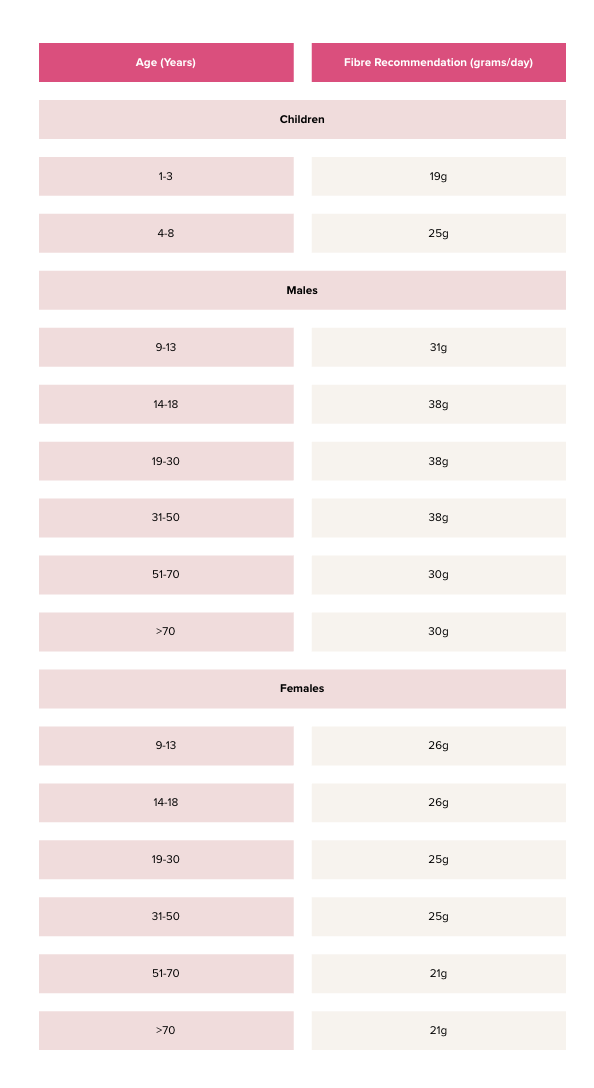
Health Canada’s fibre recommendations by age group
Where You Can Find Fibre
Many everyday foods already contain fibre.
Whole grains are a great place to start. Foods like oatmeal, whole-grain bread, brown rice, and whole wheat pasta provide more fibre per serving than refined grains like white bread. For example, ¾ cup of oatmeal provides about 4 grams of fibre.
Fruits like apples, pears, and berries are also great sources of fibre. Just ½ cup of strawberries contains 4 grams of fibre! Make sure to leave the skin on fruits when possible to get all of the fibre they have to offer. Vegetables such as broccoli, carrots, peas, and potatoes (with the skin) are also good sources. ½ cup of green peas has 6 grams of fibre, and 1 medium sweet potato has 4 grams! Remember, frozen fruits and veggies work great too!
Bean and lentils, either dried or canned, are especially rich in fibre, with ¾ cup providing 6 grams. They are a great addition to soups, salads, or pasta sauces to give them an extra boost. Nuts and seeds, such as almonds, chia, or flaxseeds also provide fibre and can be added to your family’s favourite breakfast foods!
When reading nutrition labels, here’s a simple way to evaluate their fibre content per serving:
2 grams or more is a source
4 grams or more is a high source
6 grams or more is a very high source
Small Changes That Add Up
Adding more fibre to your family’s meals doesn’t need to be complicated. Small changes throughout the day can make a big difference.
Here are a few easy strategies you can try:
Try switching from white bread to whole grain bread, or from white rice to brown rice.
Choose oatmeal or high-fibre cereal for breakfast, and add some berries as a bonus.
Add lentils or beans next time you make pasta sauce, soup, or tacos.
Include a fruit, vegetable, or whole grain with every meal and snack. Sprinkle chia or flax seeds onto your yogurt or blend them into smoothies.
Try making a batch of quinoa salad as a simple and filling lunch option.
Increase Fibre Gradually
When increasing fibre in your diet, it’s best to do it slowly. Adding too much fibre into your diet too quickly can sometimes cause stomach pain, bloating, or gas. Gradually add more fibre to give your body time to adjust. Drinking plenty of fluids is also important when increasing your fibre intake to keep your stool soft.
Final Thoughts
Fibre is a powerful nutrient that supports digestion, heart health, and overall wellbeing.
The best part is that increasing fibre in your diet doesn’t require complicated meal plans or trendy products! Simple choices like whole grains, fruits, vegetables, and beans can give your family all the benefits fibre has to offer.
Petits changements, grands bienfaits: comment ajouter plus de fibres aux repas en famille
Écrit par Katelyn Maclellan, étudiante en nutrition
Pourquoi les fibres sont-elles si importantes?
Avez-vous remarqué à quel point les fibres semblent être partout ces derniers temps? Des céréales et des croustilles riches en fibres aux boissons gazeuses «fonctionnelles» contenant des fibres prébiotiques, comme Poppi et Olipop, les produits enrichis en fibres occupent de plus en plus de place sur les tablettes des épiceries. Les experts en nutrition et en marketing prévoient que les produits axés sur les fibres continueront de gagner en popularité à mesure que de plus en plus de gens découvriront leurs bienfaits pour la santé intestinale et le bien-être général.
Mais voici la bonne nouvelle: vous n’avez pas besoin de produits à la mode pour consommer davantage de fibres. Les fibres sont faciles à intégrer aux repas de tous les jours et se trouvent naturellement dans de nombreux aliments que les familles consomment déjà.
À mesure que l’intérêt pour la santé intestinale augmente, de nombreuses entreprises alimentaires ajoutent des fibres aux boissons et aux aliments emballés. Bien que ces produits puissent contribuer à votre apport en fibres, les haricots, les légumes, les fruits et les grains entiers demeurent parmi les sources les plus intéressantes, abordables et faciles à intégrer aux repas en famille.
Heureusement, ajouter davantage de fibres aux repas familiaux n’a rien de compliqué. Souvent, quelques petits changements ou ajouts simples suffisent pour rendre vos repas encore plus nutritifs.
Que sont les fibres?
Les fibres sont un type de glucide que notre organisme ne peut pas digérer complètement. Plutôt que d’être décomposées et utilisées comme source d’énergie comme les autres glucides, elles traversent le système digestif et jouent plusieurs rôles importants en cours de route.
Il existe deux principaux types de fibres:
Les fibres solubles se dissolvent dans l’eau pour former un gel. Elles aident à stabiliser la glycémie en ralentissant la digestion des glucides, favorisent la santé du cœur en se liant au cholestérol afin de l’éliminer dans les selles et peuvent aider à soulager la diarrhée.
Les fibres insolubles ne se dissolvent pas dans l’eau. Elles aident à prolonger la sensation de satiété après les repas, augmentent le volume des selles et facilitent le passage des aliments dans le système digestif, ce qui favorise la régularité intestinale.
La plupart des aliments d’origine végétale contiennent un mélange de ces deux types de fibres.
Pourquoi les fibres sont-elles importantes pour toute la famille?
Les fibres favorisent la santé à toutes les étapes de la vie!
Chez les enfants, elles contribuent à une bonne santé digestive en favorisant la régularité intestinale et le développement d’un microbiome intestinal sain. Un intestin en santé joue un rôle important dans le bien-être général et peut aider à prévenir des problèmes courants comme la constipation.
Chez les adultes, la consommation de fibres est associée à un risque moindre de maladies cardiaques et de diabète de type 2, ainsi qu’à une meilleure santé du côlon. Consommer régulièrement des aliments riches en fibres est une façon simple de prendre soin de sa santé globale en vieillissant.
Les fibres peuvent également aider tous les membres de la famille à se sentir rassasiés et satisfaits plus longtemps après les repas. Comme elles ralentissent la digestion, elles aident à maintenir une glycémie plus stable et peuvent contribuer à prévenir les baisses d’énergie entre les repas.
Malgré tous ces bienfaits, la plupart des Canadiens ne consomment qu’environ la moitié de l’apport quotidien recommandé en fibres.
Recommandations de Santé Canada en matière de fibres selon l’âge
Où trouve-t-on des fibres?
De nombreux aliments que nous consommons régulièrement contiennent déjà des fibres.
Les grains entiers constituent un excellent point de départ. Les flocons d’avoine, le pain à grains entiers, le riz brun et les pâtes de blé entier fournissent plus de fibres par portion que les grains raffinés, comme le pain blanc. Par exemple, ¾ de tasse de flocons d’avoine fournit environ 4 grammes de fibres.
Les fruits comme les pommes, les poires et les petits fruits sont également d’excellentes sources de fibres. Une ½ tasse de fraises contient à elle seule 4 grammes de fibres! Lorsque c’est possible, gardez la pelure des fruits afin de profiter de toutes les fibres qu’ils ont à offrir.
Les légumes comme le brocoli, les carottes, les pois et les pommes de terre avec la peau sont aussi de bonnes sources de fibres. Une ½ tasse de pois verts contient 6 grammes de fibres et une patate douce moyenne en contient 4 grammes! N’oubliez pas que les fruits et légumes surgelés sont également une excellente option.
Les haricots et les lentilles, qu’ils soient secs ou en conserve, sont particulièrement riches en fibres. Une portion de ¾ de tasse en fournit 6 grammes. Ils s’ajoutent facilement aux soupes, aux salades et aux sauces à pâtes pour augmenter leur teneur en fibres. Les noix et les graines, comme les amandes, les graines de chia et les graines de lin, fournissent également des fibres et peuvent facilement être ajoutées aux déjeuners préférés de votre famille.
Lorsque vous consultez les étiquettes nutritionnelles, voici une façon simple d’évaluer la teneur en fibres par portion:
2 grammes ou plus: source de fibres
4 grammes ou plus: source élevée de fibres
6 grammes ou plus: source très élevée de fibres
De petits changements qui font toute la différence
Ajouter plus de fibres aux repas de votre famille n’a pas besoin d’être compliqué. De petits changements au cours de la journée peuvent faire une grande différence.
Voici quelques stratégies simples à essayer:
Remplacez le pain blanc par du pain à grains entiers ou le riz blanc par du riz brun.
Choisissez des flocons d’avoine ou des céréales riches en fibres au déjeuner et ajoutez-y quelques petits fruits.
Ajoutez des lentilles ou des haricots la prochaine fois que vous préparez une sauce pour pâtes, une soupe ou des tacos.
Ajoutez un fruit, un légume ou un aliment à grains entiers à chaque repas et collation. Saupoudrez des graines de chia ou de lin sur votre yogourt ou ajoutez-les à vos smoothies.
Préparez une grande portion de salade de quinoa pour un dîner simple et rassasiant.
Augmentez progressivement votre apport en fibres
Lorsque vous augmentez votre consommation de fibres, il est préférable d’y aller progressivement. Ajouter trop de fibres trop rapidement peut parfois causer des maux de ventre, des ballonnements ou des gaz. Augmentez graduellement votre apport afin de laisser à votre organisme le temps de s’adapter. Il est également important de boire beaucoup de liquides lorsque vous consommez davantage de fibres afin de favoriser des selles plus molles et faciles à évacuer.
En résumé
Les fibres sont un nutriment important qui favorise la digestion, la santé du cœur et le bien-être général.
Et ce qu’il y a de mieux, c’est qu’il n’est pas nécessaire de suivre un plan alimentaire compliqué ni d’acheter des produits à la mode pour en consommer davantage! Des choix simples comme les grains entiers, les fruits, les légumes et les légumineuses peuvent permettre à toute votre famille de profiter des nombreux bienfaits des fibres.